Solutions
Pedestrian Wind Comfort
Ensure safe and comfortable urban environments with cloud-based CFD simulation
Why Pedestrian Wind Comfort Matters
Tall buildings and dense urban layouts alter wind patterns at street level, creating zones of high wind speed that can make outdoor spaces uncomfortable or even unsafe. A pedestrian wind comfort (PWC) study uses computational fluid dynamics to predict these conditions before construction begins, enabling architects and planners to design safer, more livable cities.
Downwash
Air hitting a tall building is forced downward, increasing wind speed at street level near the base.
Corner Acceleration
Wind speeds up as it wraps around building corners, generating strong gusts in adjacent walkways.
Channeling
Wind funneled through narrow gaps between buildings accelerates, creating wind tunnels at pedestrian level.
Three Steps to Wind Comfort Assessment
Upload Geometry
Import your CAD or STL building model. dicehub automatically fetches surrounding buildings from OpenStreetMap.
Select Location
Pick your site on the map. Wind data from the nearest weather station is fetched automatically.
Get Results
Receive comfort maps, velocity fields, and a professional PDF report with Lawson and NEN8100 criteria.
Industry-Standard Comfort Criteria
Results are evaluated against established comfort standards used by planning authorities and wind engineers globally.
Lawson LDDC
| Category | Threshold | Activity |
|---|---|---|
| A | < 2.5 m/s | Sitting |
| B | < 4 m/s | Occasional Sitting |
| C | < 6 m/s | Standing |
| D | < 8 m/s | Strolling |
| E | < 10 m/s | Fast Walking |
| F | > 10 m/s | Uncomfortable |
| G | 15 m/s | Unsafe |
NEN8100
| Category | Threshold | Activity |
|---|---|---|
| A | 5 m/s, < 2.5% | Sitting |
| B | 5 m/s, < 5% | Occasional Sitting |
| C | 5 m/s, < 10% | Leisurely Walking |
| D | 5 m/s, < 20% | Fast Walking |
| E | 5 m/s, ≥ 20% | Uncomfortable |
Example Project
Case Study: Berliner Bremsenwerk
Pedestrian Wind Comfort Assessment for a historic Berlin development using CFD simulation with 16 wind directions.
Project Details
- Address
- Am Bremsenwerk 1, 10317 Berlin
- Building Dimensions
- 260m x 170m x 50m
- Weather Station
- Berlin Tempelhof (6.44 km)
- Wind Standard
- EN 1991-1-4:2005+A1:2010
- Computational Mesh
- 69.7 million cells
- Wind Directions
- 16 (360°)
- Domain Type
- Cylindrical
Key Findings
- Roof deck areas at Pavilion A (25.23m) and Pavilion D (26.90m) are generally comfortable for standing
- Some areas require mitigation measures if sitting areas are planned
- Dominant wind from West (270 degrees) with highest frequency of 12.66%
- Corner acceleration effects identified near building edges
- Comfort maps generated for both Lawson LDDC and NEN8100 criteria
Simulation Results
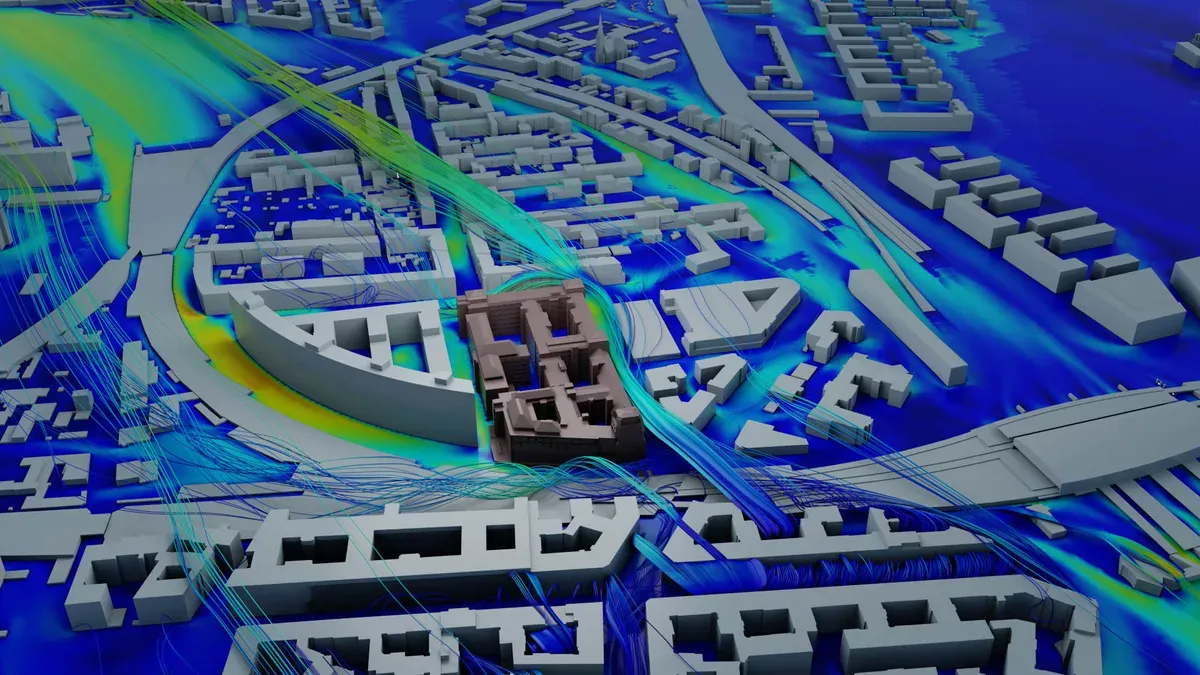
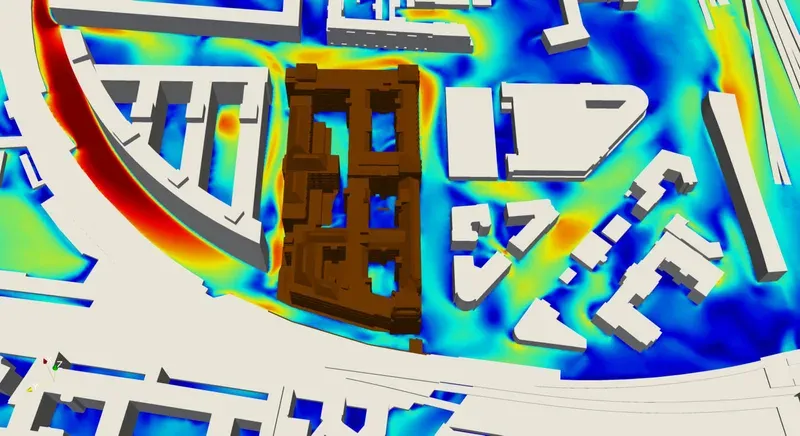
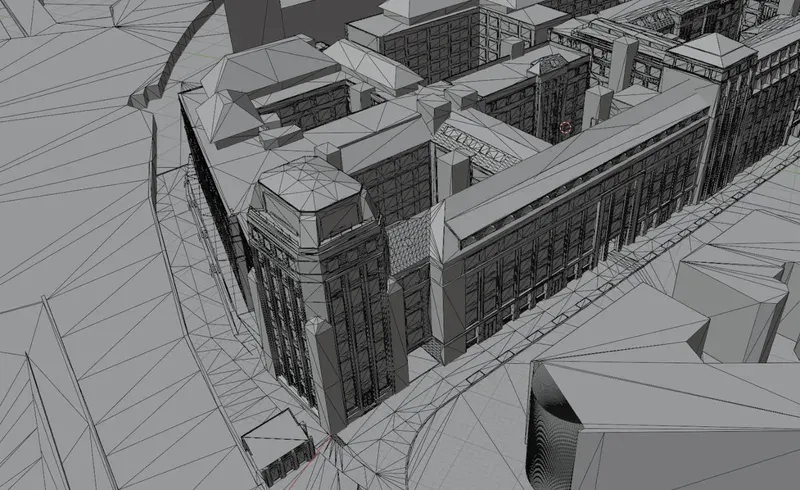
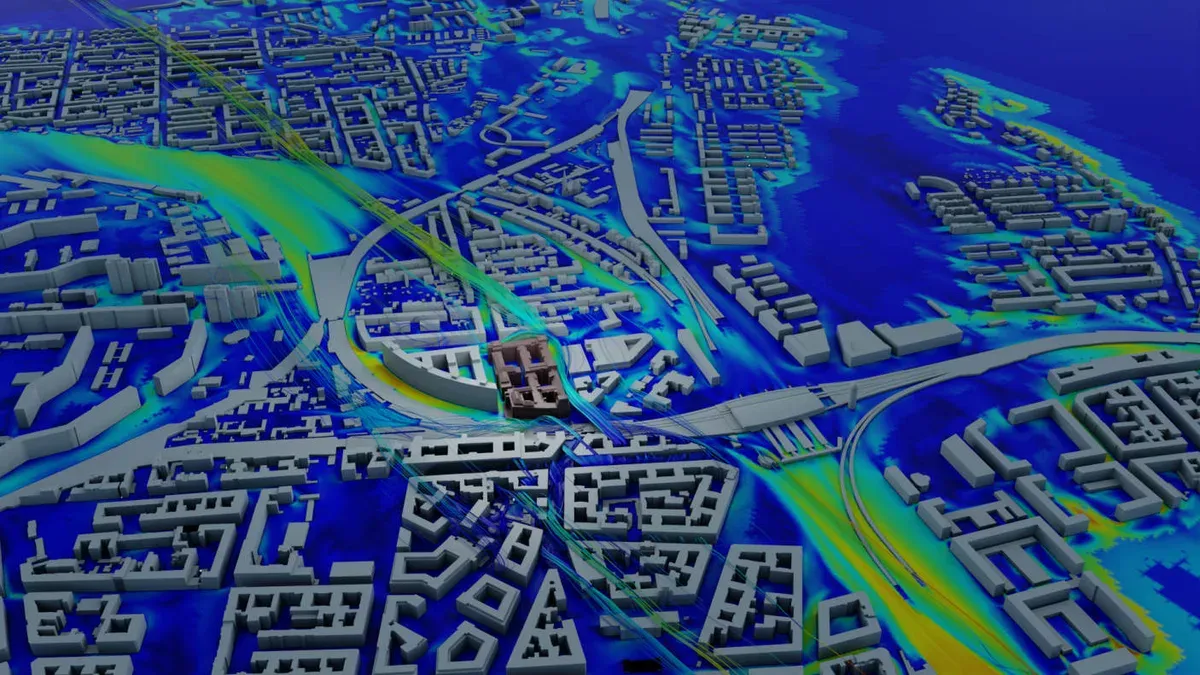
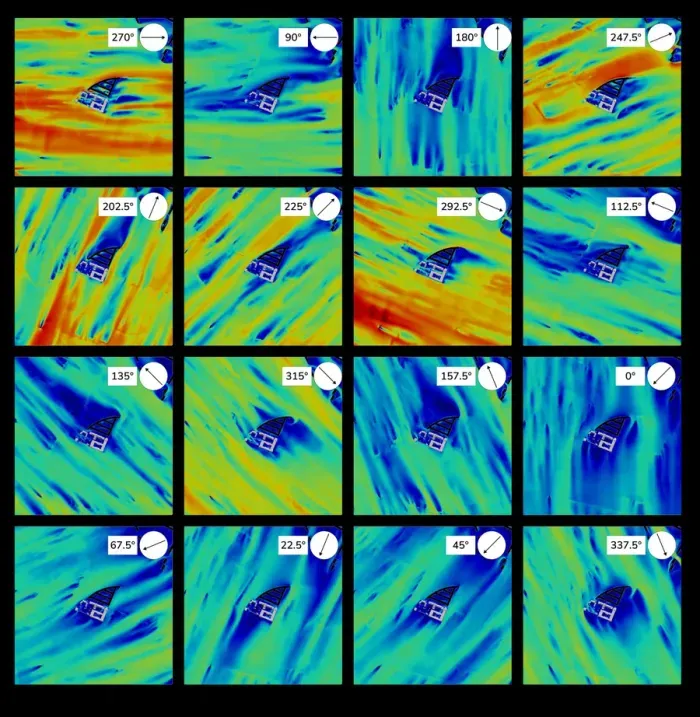
Each panel shows the velocity field from a different wind direction. Combined with meteorological frequency data, these produce the final comfort assessment.
Why Choose dicehub for Wind Comfort
Cloud-based
No hardware or software installation. Run simulations directly in your browser on scalable cloud infrastructure.
Pre-configured Templates
Start your PWC study in minutes with ready-to-use templates. No CFD expertise required.
16 Directions in Parallel
Run all wind directions simultaneously on cloud HPC. Full results in hours, not days.
Professional Reports
Automatically generated comfort maps with Lawson LDDC and NEN8100 criteria. Ready for planning submissions.
Real-time Collaboration
Share projects with your team. Review results together in real-time, like Google Docs for simulations.
Pay-as-you-go
Representative 16-direction PWC studies start around EUR96, depending on mesh complexity and runtime. No subscriptions, no upfront fees.
Ready to assess wind comfort for your project?
Get started in minutes. No credit card required.